If you look in the mirror and notice your upper teeth overlapping significantly with your bottom teeth, you aren’t alone. An overbite is one of the most common reasons patients visit My Smile Orthodontist. While often viewed as a cosmetic concern, a deep overbite can lead to jaw pain, accelerated tooth wear, and even gum issues if left untreated.
Fortunately, correcting an overbite is a predictable, well-understood process. Whether through advanced clear aligners or the precision of Damon Braces, Dr. Neil Mandalia and his team in Bucks County specialize in aligning bites for long-term health and stability.
This guide walks you through exactly what an overbite is, how we fix it, and the science behind the smile.
Key Takeaways
- What is an Overbite? An overbite occurs when the upper front teeth excessively overlap the lower front teeth, which can range from mild to severe.
- Why Correcting an Overbite Matters: Beyond aesthetics, untreated overbites can cause jaw discomfort, excessive tooth wear, and potential gum complications over time.
- Effective Treatment Options: Advanced clear aligners and Damon Braces are proven methods to correct overbites, offering precision and long-term stability.
- Expert Care in Bucks County: Dr. Neil Mandalia and his team provide specialized, tailored treatments designed to enhance bite alignment and overall oral health.

What is an Overbite?
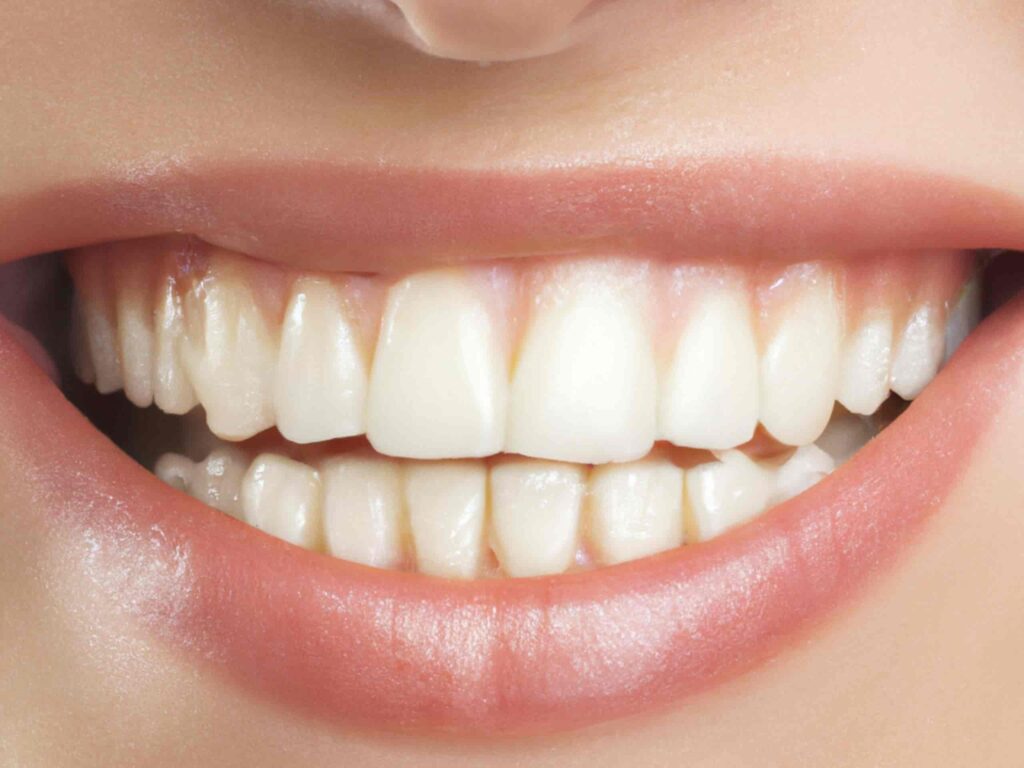
An overbite is a dental condition where the upper front teeth vertically overlap the lower front teeth by more than 2-3 millimeters. While a slight overlap is normal and healthy, a deep bite (excessive overlap) can cause the lower teeth to bite into the roof of the mouth or wear down the upper teeth.
To understand overbites, it helps to distinguish them from “overjet,” though the two often happen together:
- Overbite (Vertical): The percentage of the lower teeth covered by the upper teeth. Ideally, your upper teeth should cover about 30% of your lower teeth. If they cover 50% to 100%, it is considered a deep bite.
- Overjet (Horizontal): The distance the upper teeth stick out forward past the lower teeth (often called “buck teeth”).
The correction process depends heavily on whether the issue is dental (the teeth are tipped) or skeletal (the lower jaw is shorter or set back further than the upper jaw).
Causes of Overbites
Overbites are primarily caused by genetic factors that influence the shape and size of the jaw and teeth. However, environmental factors and childhood habits, such as prolonged thumb sucking, pacifier use, or tongue thrusting, can also disrupt jaw development and lead to dental misalignment.
Understanding the root cause is critical for Dr. Mandalia to prescribe the right treatment.
- Genetics: Just as you inherit your eye color, you often inherit your jaw structure. If your parents had a deep bite, you are more likely to have one.
- Skeletal Discrepancies: Sometimes the lower jaw (mandible) is smaller than the upper jaw (maxilla), causing the teeth to naturally rest in an overbite position.
- Habits: Persistent thumb sucking or pushing the tongue against the teeth (tongue thrust) can flare the upper teeth forward and depress the lower teeth, deepening the bite.
Step-by-Step Correction Methods
At My Smile Orthodontist, we customize the approach based on the patient’s age and the severity of the bite.
Braces (Damon System)
Braces correct overbites by applying continuous, controlled pressure to level the dental arches and adjust the vertical position of the teeth. By using wires to intrude (push up) the front teeth and extrude (pull up) the back teeth, orthodontists can open a deep bite over a period of 18–24 months.
We utilize the Damon System, a self-ligating bracket technology that offers distinct advantages over traditional metal braces:
- Intrusion of Incisors: The archwires work to gently push the front teeth back into the gum line (intrusion), reducing the overlap.
- Extrusion of Molars: Simultaneously, the back teeth are encouraged to erupt slightly further (extrusion), which helps open the bite.
- Elastics (Rubber Bands): These are often hooked from the upper front teeth to the lower back teeth to help pull the upper jaw back or bring the lower jaw forward, correcting the relationship between the two arches.
Clear Aligners
Clear aligners correct overbites by using a series of custom-molded plastic trays to apply specific force systems to the teeth. Features like “precision bite ramps” on the back of the upper aligners disclude the back teeth, allowing them to erupt while simultaneously intruding the front teeth to correct the deep bite.
Clear aligners are a popular choice for our adult and teen patients in Newtown and Holland because they are discreet and removable.
- Leveling the Curve of Spee: A deep bite often correlates with a deep “Curve of Spee” (a curvature in the biting plane of the lower teeth). Aligners apply pressure to flatten this curve.
- Attachments: Small, tooth-colored shapes bonded to the teeth give the aligners a grip surface, allowing for complex movements like rotating roots or pushing teeth into the bone.
- Predictability: Dr. Mandalia uses advanced 3D imaging to plan the exact force required for every millimeter of movement.
Other Methods (TADs and Surgery)
For severe skeletal overbites that cannot be fixed with braces or aligners alone, orthodontists may use Temporary Anchorage Devices (TADs) or orthognathic surgery. TADs provide a fixed point in the jawbone to move teeth more effectively, while surgery physically repositions the jaw for proper alignment.
- TADs: These are tiny, temporary mini-screws placed in the gum. They serve as an anchor, allowing the orthodontist to pull teeth in directions that wouldn’t be possible using other teeth as anchors.
- Orthognathic Surgery: In adult cases where the lower jaw is significantly underdeveloped, surgery may be required to lengthen the mandible. This is typically a collaborative process between Dr. Mandalia and an oral surgeon.
The Physics of Tooth Movement: Why Some Braces Are Faster Than Others
Orthodontic appliances work by applying mechanical forces that trigger a biological response called “bone remodeling.” When continuous pressure is applied, bone cells (osteoclasts) break down bone on the pressure side, while other cells (osteoblasts) build new bone on the tension side, allowing the tooth to move through the jaw.
To truly understand how we correct an overbite, we have to look at the biomechanics involved.
- Force-Driven vs. Shape-Driven Mechanics:
- Shape-Driven (Aligners): Clear aligners work on displacement. The tray is shaped slightly differently than the current position of your teeth. When you put it on, the plastic flexes, and its elasticity tries to return to its original shape, pushing the tooth along with it.
- Force-Driven (Braces): Braces use wires that want to return to a perfect arch shape. The wire stores energy when it is deflected into the crooked bracket. As it unbends, it delivers a constant force. The Damon System uses a slide mechanism rather than elastic ties, which reduces friction. This allows the wire to work more efficiently with less resistance, often resulting in faster treatment times and greater comfort.
- Torque: This refers to the twisting force required to control the angle of the tooth root. In overbite correction, torque is essential to ensure the front teeth don’t just tip backward but move bodily, keeping the roots in the center of the bone.
- Adhesive Chemistry: The “glue” used to attach brackets or aligner attachments is a resin composite. We prepare the tooth surface with an etchant (typically phosphoric acid) to create microscopic roughness. A liquid primer flows into these micro-crevices, and the adhesive creates a mechanical interlock. This ensures your appliance stays fixed firmly enough to transfer force, but can still be safely removed when you reveal your new smile.
Why Choose My Smile Orthodontics?
Correcting an overbite is about more than just straight teeth; it’s about protecting your jaw joints and ensuring the longevity of your dental health. Dr. Neil Mandalia brings a unique background to this challenge. With a Bachelor of Science in Kinesiology and a Doctorate in Medicine in Dentistry, plus an MBA, he combines an analytical engineering mindset with an aesthetic eye.
At our offices in Newtown and Holland, we prioritize:
- Technology: From BeamReader imaging to 3D printing, we use data to drive decisions.
- Comfort: We offer the Damon System and high-quality clear aligners to minimize discomfort.
- Convenience: We know you are busy. That’s why we offer flexible scheduling and fewer required appointments compared to traditional practices.
Frequently Asked Questions
Q: Can an overbite correct itself?
A: No, an overbite will not correct itself. Once the permanent teeth and jaw have finished growing, the position of the bite is set. In fact, overbites can worsen over time due to tooth wear and age-related changes. Professional orthodontic treatment is required to correct the misalignment.
Q: How long does it take to fix an overbite?
A: Correction typically takes between 12 and 24 months. Minor cases treated with clear aligners may take 12–18 months, while severe skeletal overbites treated with braces might require 18–24 months. Treatment time depends heavily on patient compliance and biological response.
Q: Is it ever too late to fix an overbite?
A: It is never too late. While it is often easier to modify jaw growth in children using appliances like expanders, adults can successfully correct overbites using braces or clear aligners. In adult cases, the focus is on dental camouflage (moving teeth to mask skeletal discrepancies) or surgical correction for severe cases.
Final Thoughts on Correcting Overbites
An overbite is a complex mechanical puzzle, but solving it leads to a healthier, more confident life. Whether you are considering treatment for your child or finally addressing your own smile, the first step is a professional evaluation.
Don’t let a deep bite compromise your dental health. Contact My Smile Orthodontist today to schedule your complimentary consultation with Dr. Mandalia. We’ll map out a customized plan to give you the smart start on the smile you deserve.
Visit our Holland location today!