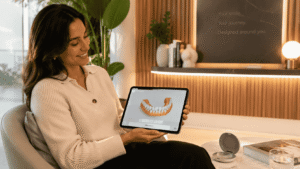
You catch it in a photo first. Maybe a front tooth is turned a little, or the bottom teeth are crowding again. And then the thought hits: my teeth shifted back after braces, and I spent years in treatment for nothing.
That feeling is real, and it stings. You (or your parents) invested time, money, and a lot of patience in that smile. Seeing it slip away can feel like a quiet loss.
Here’s the thing, though. Relapse is common, it has clear causes, and it can be fixed, often with a much shorter and simpler plan than your first round. In this guide, you’ll learn why teeth move after braces, how to tell how serious your shifting is, and what your options look like here in Newtown and across Bucks County.
Key Takeaways
- Teeth keep moving for your whole life, so some shifting after braces is normal and not your fault.
- The most common causes are stopping retainer wear, a broken retainer, aging, and changes in your bite or gums.
- Minor relapse is often corrected with clear aligners or a short round of treatment, not a full redo.
- Do not force an old retainer that no longer fits. It can stress your teeth and gums.
- A fresh exam finds the real reason your teeth moved, so the fix lasts this time.
- Remote monitoring can mean fewer trips to the office while your teeth move back into place.

Why Did My Teeth Move After All That Work?
Teeth are not set in concrete. They sit in bone and are held by tiny fibers that act a bit like rubber bands. After braces come off, those fibers want to pull teeth back toward where they started.
That pull is strongest in the first months after treatment. But it never fully goes away. Your jaw, gums, and bite keep changing as you age, and your teeth follow along.
So if you finished braces at 14 and you’re now 35, two decades of small changes have added up. That’s not a failure on your part. It’s biology.
The Usual Suspects Behind Relapse
Most relapse cases trace back to a few familiar causes. The big one is the retainer. Many people wore theirs faithfully for a year or two, then it got lost, cracked, or tucked in a drawer during college.
A bonded wire behind the front teeth can also come loose without you noticing. One tooth breaks free, and it starts to drift on its own. Other causes include natural aging, grinding or clenching, and gum or bone changes that give teeth more room to tip.
Wisdom teeth get blamed a lot. Research points more strongly to retainer habits and natural aging as the main drivers. Still, every mouth is different, which is why an exam matters more than a guess.
What the Research Says About Retainers
Studies back up what orthodontists see every day. One comparison of retention methods found that permanent bonded retainers held teeth in place better than removable ones over the study period. Removable retainers still help, but only when they’re worn.
The takeaway is simple. Keeping a straight smile is a long-term job, not a one-time event. Your retainer plan should fit your life, so you’ll stick with it.
How Bad Is It? Sizing Up Your Shift
Not all relapse looks the same. Some people notice one lower tooth turning slightly. Others feel their bite has changed, or they see gaps opening up where there were none.
Ask yourself a few questions. Does your old retainer still fit, or does it feel tight? Do your teeth meet the way they used to when you bite down? Is the change getting worse month to month?
A small shift that’s stable is very different from one that’s still moving. Both are fixable. But the second one is a good reason to book a visit sooner rather than later.
Still have questions about what treatment involves? Our orthodontic treatment FAQs cover the basics, from timing to cost.
Should You Squeeze Into Your Old Retainer?
It’s tempting. You dig out the old retainer, push it in, and hope it nudges things back. If it slides in with mild pressure, wearing it at night may help hold your teeth where they are while you get checked.
But if you have to force it, stop. Jamming a retainer onto teeth that have moved can put heavy pressure on the roots and gums. It can also crack the retainer, and then you’re back where you started with one less tool.
Look, a retainer is built to hold teeth, not to move them very far. Once teeth have shifted past a certain point, you need a real plan to bring them back.
Your Options for Fixing Relapse
The good news? Fixing relapse usually takes less than your first treatment did. Your teeth have been straight before, and minor movement often responds well to a focused plan.
At My Smile Orthodontist, Dr. Neil Mandalia starts by finding out why your teeth moved, not just where they moved. That answer shapes everything else. Here’s how the main options compare, and you can explore more on our types of braces page.
| Option | Best For | Visible? | Removable? | Good to Know |
|---|---|---|---|---|
| Clear aligners | Mild to moderate crowding or spacing | Nearly invisible | Yes | Works best when worn 20 to 22 hours a day |
| Invisalign® clear aligners | Mild to moderate relapse in adults and teens | Nearly invisible | Yes | Trays are swapped on a set schedule |
| Traditional metal braces | Bite changes or more complex movement | Yes | No | Strong, precise control of each tooth |
| Damon system braces | Moderate shifting that needs fixed control | Yes | No | Self-ligating design with no elastic ties |
| New retainer only | Very small shifts caught early | Clear or hidden wire | Depends on type | Holds teeth in place but moves them very little |
Clear Aligners for Adult Relapse
For most adults, clear aligners are the first option worth talking about. They’re removable, hard to spot, and easy to fit around meetings, travel, and family life. If you’re a working parent who doesn’t want metal back in your mouth, this is often where the conversation goes.
Our office offers both clear aligners and Invisalign® treatment. Dr. Neil helps you choose based on your teeth and your schedule, not on what’s easiest for the office.
When Braces Make More Sense
Sometimes the shift involves your bite, not just the look of your front teeth. In those cases, fixed braces can give better control. Traditional metal braces are still one of the most precise tools in orthodontics.
Many adults are surprised at how different braces feel today compared to what they remember from middle school. Treatment for relapse is also often shorter, since you’re correcting drift rather than starting from scratch.
Fixing It Right This Time
But here’s what matters most. Straightening your teeth again is only half the job. If the reason they moved isn’t addressed, you could end up right back here in ten years.
Dr. Neil plans every case around the patient in his chair. As he puts it, “Everybody’s biology is different.” A loose bonded wire, a grinding habit, and a bite that has slowly changed each need a different fix.
That’s the benefit of a small, boutique office. The same orthodontist who checks your teeth on day one is the one who sees you through to the end. Nobody hands you off to a rotating staff.
Fewer Office Visits With Remote Monitoring
Adults with busy lives often worry about the appointments. Our practice uses DentalMonitoring, a remote system that lets you send quick scans of your teeth from home with your phone. You can learn more about how remote monitoring works in our practice.
Dr. Neil reviews your progress between visits and adjusts your schedule based on how your teeth are moving. For many patients, that means up to half the trips to the office, without cutting corners on results. DentalMonitoring has recognized our office as one of the practices using its technology to the full capacity.
A Retainer Plan You’ll Keep
Once your teeth are back in place, the plan shifts to keeping them there. That might mean a bonded wire, a removable retainer, or both. The right choice depends on your teeth, your habits, and what you’ll realistically wear.
You’ll also get clear guidance on how often to wear it and when to come in for a check. No vague “wear it as long as you can” advice that fades after a few months.
Thinking About Your Own Kids
Many parents who deal with their own relapse start wondering about their children. That’s a smart instinct. The American Association of Orthodontists recommends a first orthodontic check by age 7.
That visit doesn’t mean your child will start treatment right away. Often, the answer is to wait and watch. Dr. Neil won’t rush a young mouth or start early orthodontic treatment before it’s truly needed.

Frequently Asked Questions
Q: Is it normal for teeth to shift back years after braces?
A: Yes. Teeth keep moving throughout life due to aging, gum changes, and the natural pull of the fibers around each tooth. Relapse is most common in people who stopped wearing a retainer or had a bonded retainer come loose. At My Smile Orthodontist in Newtown, many adult patients come in for exactly this reason, often decades after their first treatment.
Q: Can I fix relapse without wearing braces again?
A: Often, yes. Mild to moderate relapse can usually be corrected with removable clear aligners, which are nearly invisible. If your bite has changed or the movement is more complex, fixed braces may give better control. Dr. Mandalia makes that call based on an exam of your teeth and bite, and he’ll explain why.
Q: Why does my lower front tooth keep turning?
A: The lower front teeth are the most likely to shift after braces because they sit in a narrow space and take steady pressure from your bite and lips. A loose bonded retainer wire is a frequent hidden cause, since one freed tooth can drift on its own. A quick check of your retainer and bite usually shows what’s going on.
Q: How do I keep my teeth from shifting again after re-treatment?
A: Lasting results come from fixing the cause of the relapse, then following a retainer plan that fits your daily life. That may include a bonded wire, a removable retainer, or both. At My Smile Orthodontist, Dr. Mandalia builds that plan around your specific teeth and habits instead of using one routine for every patient.
Get Your Smile Back on Track in Newtown
Seeing your teeth shift after braces is frustrating. But it’s common, it has a clear cause, and it’s very fixable. The right plan finds out why your teeth moved, brings them back into line, and helps them stay there.
Clear aligners, braces, and a retainer plan you’ll stick with all play a part. With remote monitoring, you may need far fewer trips to the office along the way.
If you’ve been staring at that crooked tooth in the mirror, you don’t have to keep wondering. Schedule a visit at our Newtown or Holland office, and Dr. Neil will show you exactly what’s changed and how to fix it, one honest step at a time.